

Real-Time Lead Scoring in Automated Workflows
Explore how real-time lead scoring enhances sales efficiency, prioritizes high-intent leads, and integrates seamlessly with automated workflows.
7 november 2025

Real-time lead scoring helps sales teams prioritize leads instantly based on live data, like website visits, email engagement, or demo requests. Combined with automated workflows, it eliminates delays, ensuring high-priority leads are acted on immediately. This approach improves efficiency, shortens response times, and boosts conversion rates by up to 25%.
Key takeaways:
Real-time scoring updates lead scores instantly as they interact with your brand.
Automated workflows assign leads, trigger follow-ups, and manage nurturing campaigns without manual effort.
High-intent actions (e.g., demo requests) get higher scores, while inactivity reduces points.
Tools like LeadBoxer integrate scoring with CRMs like Salesforce and HubSpot for seamless management.
Dynamic Scoring tracks real time engagement to close more sales
Setting Up Lead Scoring Criteria
Creating an effective lead scoring model starts with identifying the attributes and behaviors that genuinely predict conversions. The focus should be on data that ties directly to sales success, steering clear of assumptions or guesswork. Clear and well-defined scoring criteria are the backbone of real-time lead scoring, ensuring seamless integration with automated workflows.
Key Attributes for Lead Scoring
Successful lead scoring relies on three main data categories: demographic, firmographic, and behavioral. Each provides valuable insights into a prospect's potential to engage and eventually convert.
Demographic Data: Details like job title, seniority, and location often signal intent. For instance, a C-level executive downloading your content is a stronger indicator of interest compared to a junior employee conducting similar research.
Firmographic Data: This includes company size, industry, and revenue. A larger technology company with over 500 employees that matches your ideal customer profile would typically score higher than a small startup outside your target audience. Larger organizations often have bigger budgets and more complex decision-making processes, making them more likely prospects.
Behavioral Data: This tracks how prospects interact with your brand. Actions like visiting your website, downloading content, engaging with emails, or requesting demos reveal varying levels of buying intent. To pinpoint which attributes matter most, analyze your current customer base to identify the shared traits of your best-performing clients and quickest conversions.
Assigning Scores to Lead Actions
The points you assign to specific actions should reflect their likelihood to lead to a sale. High-intent behaviors deserve the most points, while lower-intent actions should earn fewer.
High-Intent Actions: Demo requests often signal direct interest in making a purchase, so they should receive the highest score - 25 points, for example, since these leads convert three times more often than those who simply download materials. Similarly, visits to your pricing page might earn 20 points, as they also indicate strong buying intent.
Medium-Intent Actions: Activities like downloading a whitepaper or attending a webinar show interest but less urgency. These could be assigned 10 points each.
Low-Intent Actions: Simpler engagements, such as opening an email or visiting your website, reflect minimal commitment and might only warrant 2 points.
It’s also important to consider the timing of these actions. Recent activities should carry more weight than older ones. For example, a case study download from yesterday suggests higher engagement than one from several months ago. To keep your scoring relevant, you can implement time decay - gradually reducing points for older actions - and even apply negative scoring for inactivity. For instance, prospects who’ve been inactive for 30 days or more might lose 10 points, ensuring your pipeline isn’t cluttered with outdated leads.
Action Type | Example Points | Intent Level |
|---|---|---|
Demo Request | 25 | High |
Pricing Page Visit | 20 | High |
Whitepaper Download | 10 | Medium |
Email Open | 2 | Low |
30+ Days Inactive | -10 | Negative |
Getting Sales and Marketing Teams Aligned on Scoring
For lead scoring to work effectively, sales and marketing teams need to be on the same page. Misalignment can lead to marketing passing along leads that sales finds unqualified, creating friction and missed opportunities.
Joint workshops are a great way to align both teams. Sales can share insights on the lead characteristics that typically result in closed deals, while marketing can highlight engagement patterns that precede conversions. Together, they can build a scoring model that reflects real-world patterns both teams trust.
Regular feedback sessions are equally important. If high-scoring leads fail to convert or low-scoring leads unexpectedly close deals, sales should share this feedback with marketing. This allows for ongoing adjustments to the scoring criteria, ensuring the model stays accurate and effective.
Finally, establish clear handoff rules. For instance, leads scoring 75 points or more might go directly to sales, while those scoring between 25 and 74 points enter nurturing campaigns. Regular reviews help refine these thresholds, keeping the system aligned with changing market dynamics.
Setting Up Real-Time Lead Scoring in Workflows
Once you've nailed down your scoring criteria, the next step is integrating these models into your systems. By combining real-time scoring with automated workflows, you can turn static lead data into actionable insights that actively steer your sales and marketing strategies. The key is ensuring smooth integration between your lead scoring tools and the platforms your teams rely on every day. This connection transforms static scores into ongoing, actionable insights that truly drive results.
Connecting Lead Scoring with CRM and Marketing Tools
To make real-time lead scoring effective, you need to link your scoring system to your CRM and marketing automation platforms. Tools like Salesforce, HubSpot, and Zoho offer direct integrations, allowing lead scores to update instantly based on live data.
When setting up these connections, aim for a two-way data flow. Your CRM should receive updated lead scores in real time, while the scoring system pulls fresh data from every interaction. For example, if a prospect downloads a whitepaper, this action can trigger an immediate score update in your CRM, making the new score visible to your sales team within minutes.
Setting up these integrations often involves configuring API connections or using built-in connectors. Accurate data synchronization is critical. Your systems should capture demographic details (such as job title and company size), firmographic information (like industry and revenue), and behavioral data (including website visits and email engagement). This comprehensive data collection ensures your lead scoring is as precise and reliable as possible.
Using AI for Dynamic Lead Scoring
Traditional lead scoring relies on static rules, but AI-powered systems take it to the next level by continuously learning from new data. These systems analyze historical data to identify patterns that manual scoring often misses, providing deeper insights into lead behavior.
The strength of AI-driven scoring lies in its adaptability. As leads progress through your pipeline - whether they convert or disengage - the system learns from these outcomes and refines its scoring criteria automatically. Unlike static systems that assign fixed points for individual actions, AI can recognize complex behavioral patterns. For instance, companies using AI-driven scoring have reported conversion rate increases of up to 35%. This adaptability makes AI particularly valuable in today’s fast-paced business environment, where customer behavior is constantly changing.
Automating Lead Assignment and Notifications
The real magic of real-time lead scoring comes from its ability to trigger automated actions. Threshold-based routing ensures that high-potential leads get immediate attention, while others are funneled into tailored nurturing campaigns.
For example, leads with high scores can be routed directly to top-performing sales reps, moderate leads might enter targeted email campaigns, and lower-scoring leads could receive educational content to build interest. This kind of automation ensures every lead is handled appropriately based on their potential.
Instant notifications are another game-changer. When a lead crosses a high-score threshold, your sales team can be alerted immediately, allowing them to engage with prospects showing strong buying intent without delay. Similarly, automated follow-ups can be set up to respond to score changes. If a lead’s score jumps due to multiple high-intent actions, a personalized outreach can be triggered. On the flip side, if a lead’s score drops due to inactivity, they can be automatically enrolled in a re-engagement campaign.
Lead assignment can also take into account additional factors like geographic location or company size. For instance, a high-scoring lead from a large enterprise might be routed to an enterprise sales specialist, while a similar lead from a smaller company could be assigned to someone with expertise in that industry.
To ensure no leads slip through the cracks, establish clear rules for when leads should transition between nurturing tracks, when they’re ready for sales, and how long they should stay in each stage before triggering alternative actions. This level of automation turns raw data into immediate, meaningful sales actions, keeping your team responsive and your pipeline moving efficiently.
Using LeadBoxer for Real-Time Lead Scoring
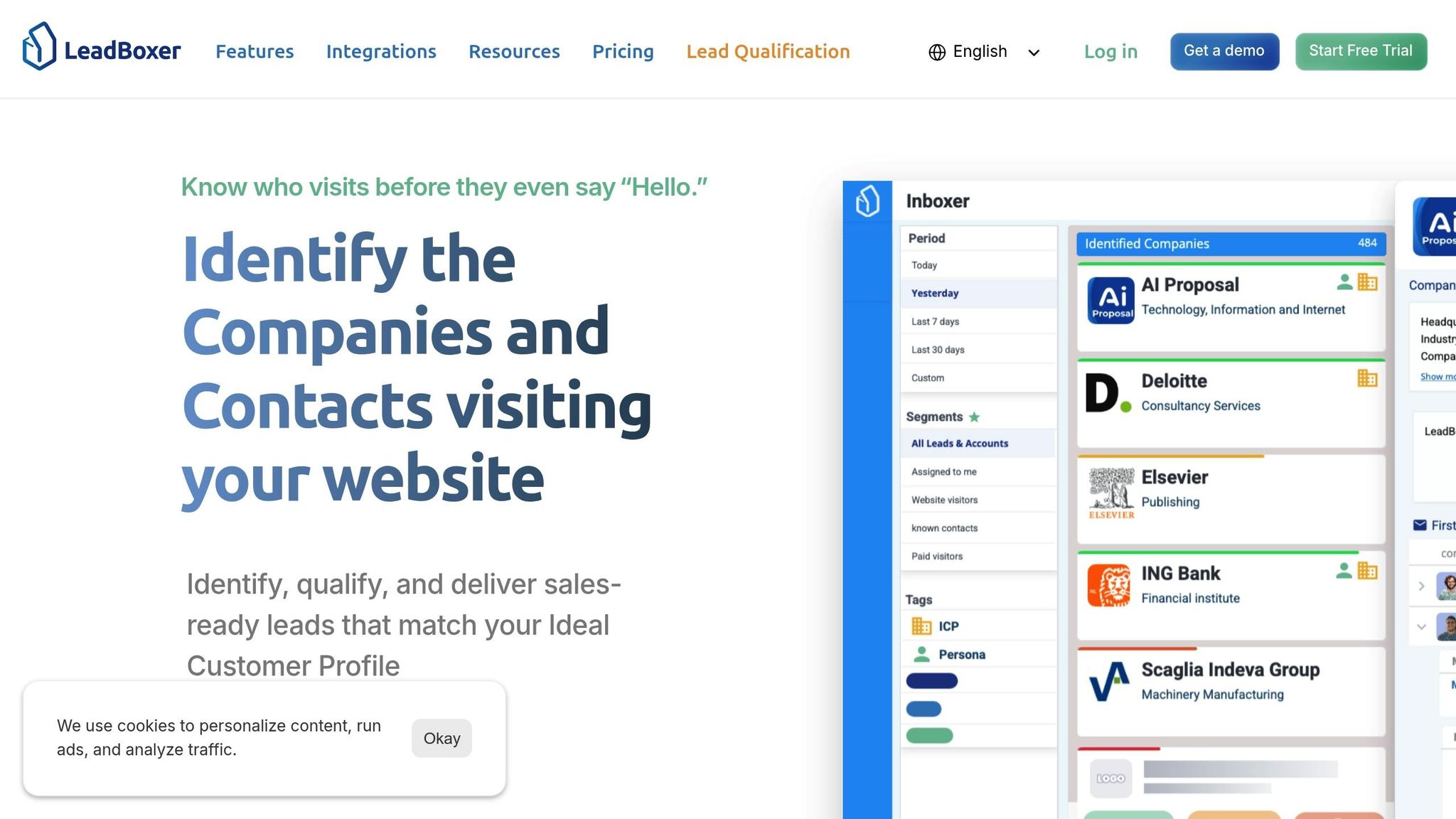
LeadBoxer takes real-time lead scoring to the next level, offering tools specifically designed for US sales teams. By combining live scoring with workflow automation, it helps sales and marketing teams quickly identify, qualify, and manage leads. With instant insights and automated actions based on real-time prospect behavior, LeadBoxer simplifies the lead management process.
Key Features of LeadBoxer for Lead Scoring
LeadBoxer’s tracking engine monitors lead activities in real time, updating scores as prospects interact with your website, emails, or downloadable content. It gathers key data points, including demographic, firmographic, and behavioral details like job title, location, company size, industry, revenue, visits, downloads, and email engagement. This information creates detailed lead profiles that help teams prioritize effectively.
The platform integrates seamlessly with popular US-based CRMs like Salesforce and HubSpot. It also supports US-specific data formatting, displaying dates in MM/DD/YYYY format, currency in US dollars ($), and using familiar number conventions. This localization ensures that lead data is easy to interpret and act on for US-based teams.
LeadBoxer also provides instant notifications for timely follow-ups. For example, if a lead performs a high-value action, like visiting your pricing page, the system alerts the appropriate team members immediately. These alerts can be customized to fit US business hours and workflows, ensuring no opportunity slips through the cracks.
The platform continuously updates scores based on recent, high-intent actions, keeping lead priorities current and actionable.
Benefits for Sales and Marketing Teams
With LeadBoxer, sales and marketing teams can focus their efforts where it matters most. By ranking leads based on their likelihood to convert, the platform simplifies qualification, shortens response times, and provides detailed engagement histories. Predictive insights help sales teams target high-potential prospects, while marketing teams can refine their segmentation for better-targeted campaigns.
Predictive scoring features have been shown to increase conversion rates by up to 25%. High-scoring leads are routed to top-performing sales reps, while others are placed in nurturing campaigns. Visual dashboards provide a complete timeline of each lead’s interactions, helping teams quickly understand a lead’s journey and decide on the next best steps - all within a single interface.
Custom Scoring Models and Insights
LeadBoxer goes beyond automation, allowing users to tailor scoring models to fit their unique business strategies. For example, a tech company focusing on enterprise clients can prioritize leads from large organizations with specific job titles, while a retail business might focus on geographic location and purchase patterns.
Users can adjust scoring rules, point values, and thresholds to align with their goals. The platform also supports advanced segmentation, letting teams filter and group leads based on factors like behavior, company size, or industry. Workflow automation ensures that changes in lead scores trigger actions such as assigning leads to sales reps, initiating personalized email sequences, or updating CRM records. If engagement drops, leads can automatically enter re-engagement campaigns.
Pricing starts at around $195 per month for small teams, with custom options available for larger organizations. Users appreciate its ease of use, real-time scoring capabilities, and integration options, making it especially valuable for small and mid-sized US businesses.
Improving and Adjusting Lead Scoring Models
Lead scoring models are not a "set it and forget it" tool. Market trends shift, customer behaviors change, and sales strategies evolve - all of which can impact the accuracy of your scoring system. To keep your workflows effective and your sales team focused on the best opportunities, these models need regular fine-tuning. By continuously refining your lead scoring approach, you can ensure it stays aligned with current buyer behaviors.
Tracking Conversion Rates and Sales Results
The best way to measure the success of your lead scoring model is by analyzing how well high-scoring leads convert into customers. Pay close attention to metrics like conversion rates, lead-to-opportunity ratios, average deal sizes, and the length of your sales cycle. These indicators can reveal whether your scoring criteria are effectively identifying quality leads.
Compare performance metrics before and after making changes to your scoring model. For instance, has the conversion rate improved? Are high-scoring leads progressing through the funnel more efficiently? Regularly reviewing these metrics gives you clear feedback on whether your adjustments are working.
Key metrics to monitor include:
Conversion rate by score range – What percentage of leads in each scoring tier become customers?
Lead-to-opportunity progression – How many scored leads move through your sales funnel?
Average deal size – Are high-scoring leads closing larger deals on average?
Sales cycle length – Do higher-scored leads close faster than others?
Leads that request demos often signal a strong buying intent and should be prioritized. Insights like these can guide you in rebalancing the weight of specific lead actions in your scoring model.
Updating Scoring Criteria Based on Market Changes
As buyer preferences and market conditions shift, your scoring criteria need to keep up. This is especially important in fast-moving industries where trends can change quickly.
Review your scoring rules regularly - monthly or quarterly is a good starting point. During these reviews, identify which lead behaviors and attributes consistently correlate with successful conversions. Adjust point values to give more weight to actions that predict sales and reduce points for less relevant behaviors.
AI-powered platforms can make this process much easier. These tools excel at spotting emerging patterns in buyer behavior and can adjust scoring criteria automatically as new data becomes available. By leveraging AI, you can keep your model up-to-date with minimal manual effort.
Frequent updates not only improve accuracy but also encourage collaboration between teams, leading to better alignment across your organization.
Working Across Teams for Better Results
Refining your lead scoring model is a team effort. Sales and marketing teams bring different but equally valuable perspectives to the table. By working together, they can refine scoring criteria and agree on what truly defines a qualified lead. This collaboration directly improves lead prioritization and automation workflows.
Establish regular feedback loops - like joint workshops or meetings - to review conversion data and scoring outcomes. Discuss situations where high-scoring leads didn’t convert or where low-scoring leads turned into customers. These conversations often uncover blind spots in your criteria.
Sales teams can highlight patterns in lead quality that automated tools might overlook, while marketing teams can provide insights into campaign performance and lead sources. AI-powered scoring systems further bridge the gap by offering a centralized data source, reducing misalignment and improving the handoff process between teams.
Shared dashboards accessible to both teams promote transparency and allow real-time tracking of scoring performance. When disagreements arise, rely on objective data to guide decisions about scoring criteria.
Document every change to your scoring rules and share updates across teams to maintain consistency. Regular training sessions can also help ensure everyone understands how the scoring model works and why certain criteria are emphasized. This shared understanding builds trust and strengthens collaboration.
Conclusion: Improving Sales Efficiency with Real-Time Lead Scoring
Real-time lead scoring is reshaping how sales teams prioritize their efforts by ensuring the most promising prospects get immediate attention. When your scoring system updates dynamically using live behavioral data - like website activity, email interactions, or demo requests - your sales reps can focus on leads that are actively showing buying intent.
Predictive scoring methods have been shown to increase conversion rates by as much as 25% compared to older, static approaches. This approach maximizes efficiency. For instance, if your CRM flags a lead after multiple visits to your pricing page, your sales team can strike while the interest is fresh. Acting quickly on such signals often makes the difference between closing a deal and losing it.
Having clear and well-defined scoring criteria, grounded in your ideal customer profile, ensures everyone on the team understands what qualifies as a high-quality lead. AI-powered tools add another layer of precision, spotting subtle patterns and adjusting scores in real time. And with seamless CRM integration, sales teams can access updated lead scores without the hassle of switching platforms.
Another big win? Real-time lead scoring fosters better alignment between sales and marketing. When both teams work from a unified, data-driven scoring system, debates over lead quality fade away. Marketing delivers stronger leads, sales provides meaningful feedback, and the entire revenue process becomes more efficient.
Leading companies treat lead scoring as a living strategy. They regularly revisit scoring criteria, tweak point values based on actual performance data, and rely on AI to adapt to changing market trends. This commitment to refining their approach helps keep scoring models accurate and ensures sales teams stay focused on the leads that matter most.
For businesses looking to take this step, tools like LeadBoxer offer the technology to make real-time scoring actionable. By combining intelligent scoring, workflow automation, and aligned teamwork, companies can turn these strategies into measurable sales success and gain a competitive edge in their markets.
FAQs
How does real-time lead scoring help align sales and marketing efforts?
Real-time lead scoring connects sales and marketing by offering immediate insights into the quality and engagement of leads. This helps both teams zero in on the best opportunities at the right moment.
When leads are prioritized based on their actions and potential value, sales teams can respond more quickly, while marketing teams can adjust their strategies to attract stronger prospects. This synergy enhances efficiency, strengthens communication, and leads to better outcomes for your business.
How does AI improve the accuracy and efficiency of lead scoring models?
AI takes lead scoring to the next level by processing massive amounts of data in real time, spotting patterns, and predicting which leads have the highest potential to convert. Using machine learning, it adjusts scoring models as fresh data comes in, making prioritization more precise over time.
This means sales teams can save time and work more efficiently by concentrating on leads that truly matter. Tools like LeadBoxer make it easy for businesses to incorporate AI-powered lead scoring into their processes, helping to drive better sales results.
How can businesses keep their lead scoring criteria accurate and effective over time?
To keep your lead scoring system working effectively, it's important to revisit and fine-tune it regularly. Use current sales data and market trends to identify patterns - look at which types of leads are converting most frequently and adjust your scoring model to focus on those profiles.
Collaboration is key here. Bring your sales and marketing teams together to agree on what defines a high-quality lead. This ensures everyone is on the same page and working toward the same goals. Tools like LeadBoxer can make this process easier by automating lead scoring and providing real-time insights to help you make data-driven updates.
Related Blog Posts

Versterk uw marketingresultaten met LeadBoxer!
Analyseer campagnes en verkeer, segmenteer op industrie, zoom in op bedrijfsgrootte en filter op locatie. Bekijk uw Toppagina's, topaccounts en vele andere metrics.


LeadBoxer
Leer meer